
Light therapy lamps are sold on one number, 10,000 lux, and most listings stop there. That figure only means something when you know the distance it was measured at, whether the light is UV-filtered, and how long the public research protocols actually sit people in front of it. This note pulls the relevant figures from the National Institute of Mental Health's page on seasonal affective disorder and from one widely sold lamp's own product page, as of October 2026, and shows which spec-sheet lines to read and which to ignore. It is not medical advice. If you are considering light therapy for a mood or sleep problem, talk to a clinician first, especially if you have an eye condition or take medication.
The protocol the number comes from
The NIMH describes light therapy for seasonal affective disorder as sitting "in front of a very bright light box (10,000 lux) every day for about 30-45 minutes," usually "first thing in the morning, from fall to spring." Those four details - 10,000 lux, 30 to 45 minutes, morning, seasonal - are the frame every lamp spec sheet should be read against. A lamp that cannot deliver 10,000 lux at a distance you will actually sit at is not running the protocol the research describes; it is running a dimmer one, which may need a longer session or may not match the studies at all.
The NIMH page also notes that a therapy light box "filters out the potentially damaging UV light, making this a safe treatment for most," and that "people with certain eye diseases or people taking certain medications that increase sensitivity to sunlight may need to use alternative treatments or use light therapy under medical supervision." Those are the two safety lines that belong on your checklist before any feature comparison: the lamp must be UV-free, and if either caveat applies to you, the first purchase is a conversation with a clinician, not a lamp.
Lux is meaningless without a distance
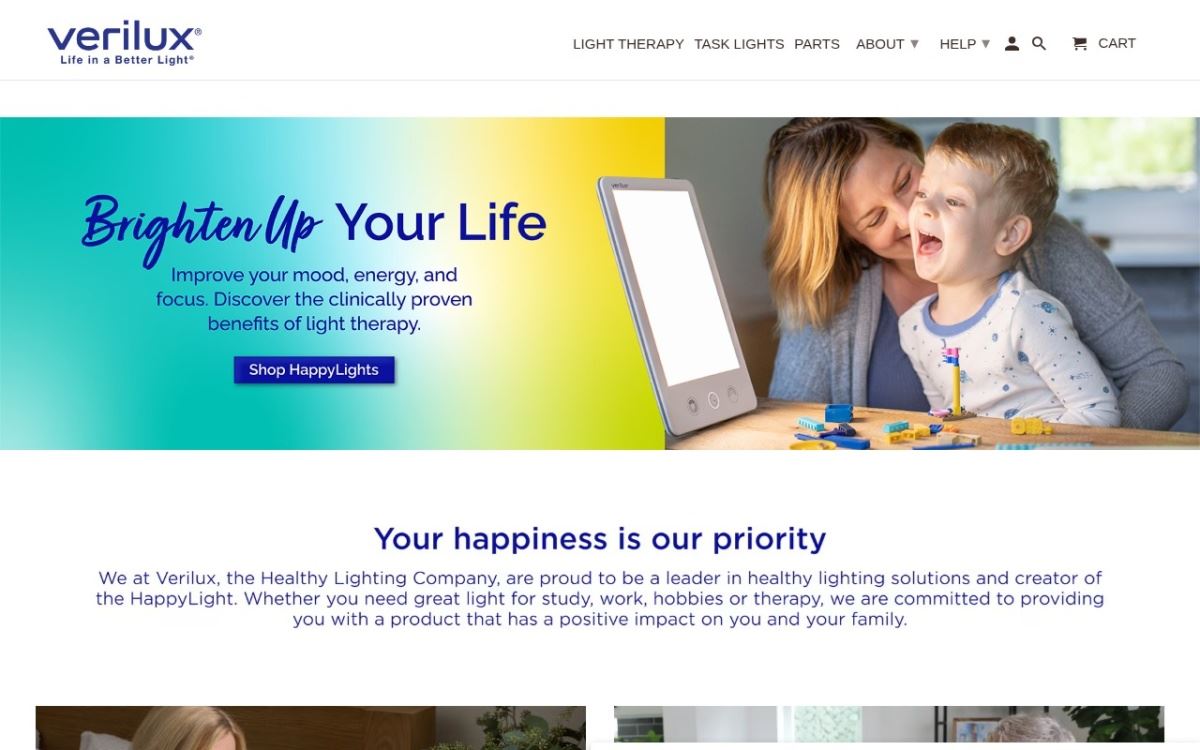
Lux measures light arriving at a surface, and it falls off sharply with distance. A lamp that produces 10,000 lux at a few inches may deliver a fraction of that at the 18 or 24 inches where a person naturally sits at a desk. This is the most common gap in lamp listings. Verilux's product page for the HappyLight Luxe, for example, states "up to 10,000 Lux" but, as of October 2026, does not state the distance at which that figure applies. That is not unusual, and it is not by itself a reason to rule the lamp out, but it means the shopper has to find the distance in the manual or ask the maker before trusting the headline.
The practical reading: treat any lux claim without a stated distance as a maximum, not a working figure, and plan to sit closer than feels natural. Larger panels generally hold their lux better at distance than small ones, because more of your field of view is lit. A compact lamp with a high lux number at a few inches is not wrong, but it is a different product from a large panel you can use while reading at arm's length, and the spec sheet should tell you which one you are buying.
The other spec lines, using one real product page
Verilux publishes a fairly complete sheet for the HappyLight Luxe, which makes it a useful worked example. As of October 2026 the page lists "UV-Free, LED, full-spectrum light," "3 HappyHue color temperature options" (the specific kelvin values are not given on the page), "4 brightness levels," a "countdown timer that is programmable up to 1 hour, in 5-minute increments," dimensions of 11.7 by 7.5 by 0.5 inches, a weight of 2 lbs, a "3-year warranty," and a price of $69.99; the page showed the item as sold out when we read it. Our Verilux HappyLight review grades it on these published figures.
What each of those lines is for: the UV-free line matches the NIMH safety note. Multiple brightness levels matter because some people find full intensity uncomfortable at first and step up to it over days. A timer that reaches 45 minutes covers the upper end of the NIMH protocol; one that caps at 30 minutes does not. Colour temperature is a comfort setting rather than a clinical one, since the NIMH page specifies intensity and timing, not colour. Warranty length is worth noting because LED panels dim over years of daily use, and a three-year term is a reasonable floor for something you may switch on every morning for half the year.
What the spec sheet cannot tell you
No lamp spec resolves whether light therapy is right for your situation. The NIMH protocol is written for seasonal affective disorder, a diagnosed condition, and the NIMH page does not extend it to general winter sluggishness, shift work or jet lag. Timing also matters in a way a lamp cannot judge: the NIMH specifies morning use, and a bright session at another time of day is outside the protocol it describes. If your goal is waking up more easily rather than mood, a sunrise-style wake-up light is a different category of device, built around timing rather than intensity; our drug-free sleep toolkit covers that distinction and where the Hatch Restore 2 sits in it.
The spec sheet also cannot tell you whether you will use the lamp. Thirty to forty-five minutes every morning for roughly half the year is a real commitment, and a lamp that lives in a drawer delivers zero lux. The ergonomics - whether it stands on a desk at eye level, whether it can be wall-mounted, whether it is light enough to move between rooms - are not clinical features, but they are the features that decide whether the clinical ones ever get used. The Verilux page, for instance, lists a detachable stand and a wall mount; that line matters more than the colour options.
A short pre-purchase checklist
One: find the distance at which the lux figure applies, from the manual if the listing omits it. Two: confirm the lamp is stated as UV-free. Three: check the timer reaches at least 45 minutes. Four: check for multiple brightness levels. Five: note the warranty term and whether registration is required. Six: before buying at all, if you have an eye condition, take medication that increases light sensitivity, or have any diagnosed mood condition, ask a clinician whether bright-light therapy is appropriate for you and how to time it. That last step is the one the NIMH page puts in plain words, and no spec sheet replaces it.
Bottom line
The 10,000 lux figure on a light therapy lamp comes from a specific protocol: that intensity, 30 to 45 minutes, in the morning, during the darker months, with UV filtered out. A spec sheet is useful only when it lets you check each of those conditions, and the line most often missing is the distance at which the lux was measured. Read for distance, UV filtering, timer range and brightness steps; treat colour temperature as comfort; and treat the decision to use light therapy at all as a medical question, which the NIMH says it is for some people.
Community discussion
Enjoyed this story? Share your thoughts below.